
Partnerships are like supercars that thrive even in tough economic times. Take, for example, the great recession back in 2008. Brands smartly teamed up with coupon and deal sites to offer shoppers irresistible promotions. Guess what happened? US consumers flocked to these sites, redeeming a whopping 3.3 billion coupons in 2009, which was a staggering 27% increase compared to 2008.
And partnerships continued to work their magic in the midst of the 2020 pandemic. Brands that had the foresight to invest in partnerships early on witnessed a remarkable 41% revenue growth in 2021. That’s the power of effective partnerships.
By building a robust partnerships program, you can unlock a treasure trove of benefits. It’s not just about boosting your revenue, but also about skyrocketing brand awareness and enhancing customer retention. Harness the potential of partnerships and watch your business reach new heights.
Partnerships offer an advantage to e-commerce businesses with any budget. Here are some key points to understand.
- Partnerships occur when a brand collaborates with another entity, such as another brand, a creator, or an affiliate, to refer business. In exchange for a commission, partners promote brands in creative ways to reach mutually beneficial marketing goals.
- Partners introduce brands to audiences they previously couldn’t reach by posting entertaining content, valuable shopping deals, and impeccable customer experiences on their channels.
Now let’s talk about the benefits of affiliate marketing.
Affiliate marketing is an effective channel that can maximize return on investment (ROI). According to the Performance Marketing Association, the affiliate channel’s return on ad spend (ROAS) delivered a 12:1 return.

Other benefits of affiliate marketing include.
– Low-risk: Brands only pay when affiliates achieve agreed-upon results, such as sales, sign-ups, or clicks.
– Builds trust: These partnerships rely on trust and deliver more authentic brand promotion compared to traditional advertising.
– Reach new target audiences: Brands can collaborate with affiliates to reach untapped and niche audience segments.
– Flexible: The channel’s flexibility allows for easy expansion into other types of partnerships.
It’s worth noting that affiliate marketing is constantly growing.
The power of affiliate marketing continues to gain momentum. For example, online face mask retailer Enro scaled its affiliate program and achieved impressive results:
- 2,500% return on ad spend (ROAS) from coupon, deal, and loyalty partners.
- More than a 60% month-over-month increase in total revenue from partners.
- Partners generated 62% of the total revenue.
- 72% of all orders were new-to-file (NTF).
- Affiliate coverage drove 69% of web traffic.
Adding partnerships to your e-commerce marketing strategy can bring several advantages. Let’s dive into the benefits.
- More revenue: Did you know that mature partnership programs contributed an average of 28% of revenue in 2019? That’s more than what paid search brought in, which was only 18%.
- Greater brand awareness: Partnering with influential individuals and brands can give your products and brand wider visibility, reaching a larger audience.
- Improved customer retention: When you have strong partnerships, it becomes easier to retain customers and encourage repeat purchases.
- Increased conversion rates: Partnerships often drive visitors who are more likely to convert into customers compared to other channels like display ads.
- Budget-friendly: The beauty of partnerships is that they are affordable. They allow you to expand your reach, engage new leads, and make sales without breaking the bank.
- Low-risk: Collaborating with successful partners reduces risks and helps you avoid the pitfalls that come with venturing into new territories.
Now, let’s talk about the types of partnerships that work well for e-commerce businesses
Creator partnerships: Remember, bigger isn’t always better. Influencer marketing is a popular choice because it helps create brand awareness, brings high-quality website traffic, and influences purchasing decisions. This type of partnership involves collaborating with influencers or creators who market your products on social media platforms like Instagram, YouTube, TikTok, and more.
When it comes to influencers, they come in different sizes. Here’s a breakdown.
- Nano-influencers (10k or less followers)
- Micro-influencers (10k-100k followers)
- Mid-influencers (100k-250k followers)
- Macro-influencers (250k–1m followers)
- Celebrity influencers (1m+ followers)
Now, let’s discuss how to compensate these creators.
You don’t necessarily need expensive creators to run successful campaigns. Smaller-scale influencers can drive revenue, conversions, and clicks just as effectively. They are also more cost-effective. For example, the average cost of an Instagram post from a micro-influencer ranges from $200 to $1000, while celebrities can charge $12,000 or more.
When it comes to payment methods, e-commerce businesses have various options. They can choose methods that align with their budgets and goals. Here are some popular payment models:
- Performance-based: Creators are paid based on specific actions, such as sales, subscriptions, sign-ups, app downloads, or free trials.
- Gifting: Brands provide products to influencers in exchange for content creation.
- Flat fee: Brands pay a fixed rate per post or campaign.
- Participation bonuses: Partners receive compensation for their contributions to upper-funnel activities like brand awareness.
- Hybrid model: A combination of a flat fee and performance/participation bonuses to motivate influencers.
- Tiered fee: A reward strategy based on performance that encourages influencers to drive sales, traffic, or leads to move between different compensation tiers.
- Monthly payouts: Creators receive a fixed monthly fee throughout the contract period.
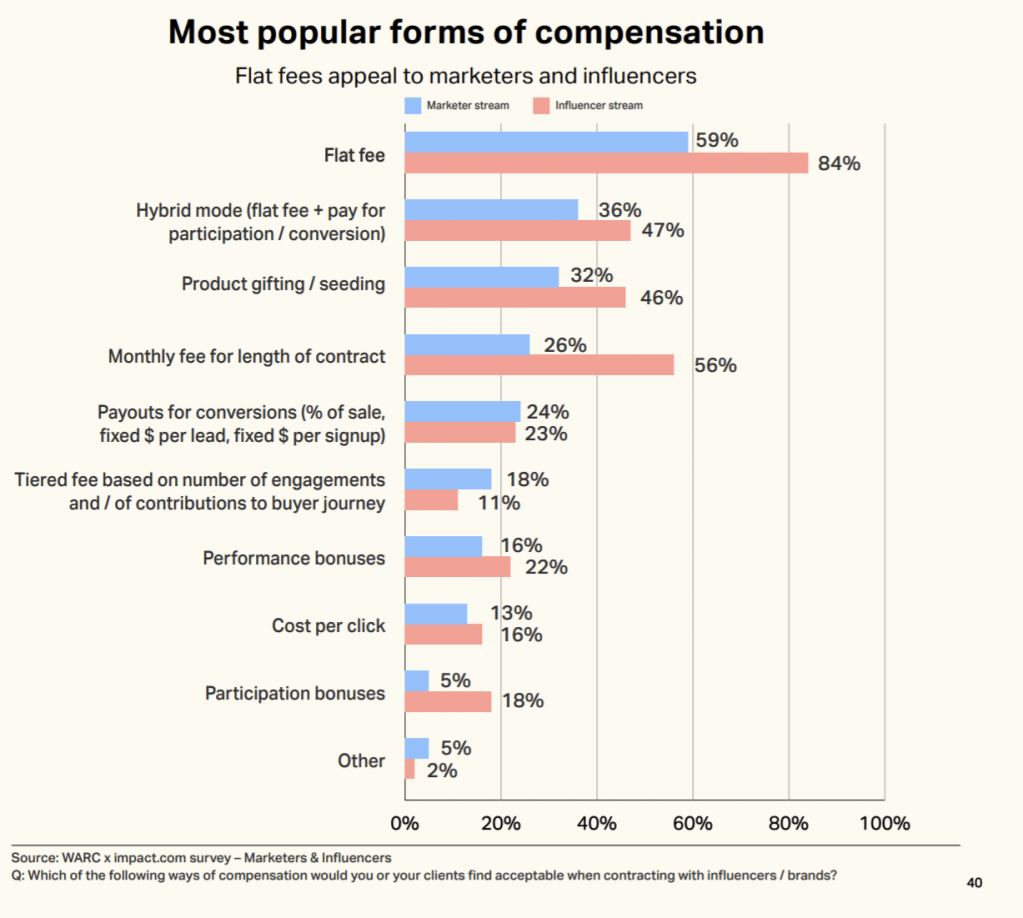
These payment methods offer flexibility and allow businesses to find the right approach for their partnerships.
By incorporating partnerships into your e-commerce marketing strategy and leveraging different types of partnerships and payment methods, you can unlock new opportunities and achieve growth.
 Derrick Branco